Oil painting places unique demands on an Artist Easel. Unlike quick sketching or light watercolor work, oil painting often involves heavier stretched canvases, thicker paint layers, repeated brush pressure, and longer working sessions. The easel must hold the canvas firmly while allowing the artist to step back, judge proportions, and build layers with control.
A dedicated oil painting easel should offer more than basic support. It needs strong load capacity, a stable base, and smooth height and angle adjustment. When working with oil paint, artists may use stiff brushes, palette knives, or impasto techniques. These actions can create pressure on the canvas, so a weak painting stand may shake, slide, or gradually lose its position.
Stability also affects the final result. A steady Artist Easel helps maintain cleaner brushwork, better edge control, and more accurate composition. For larger oil paintings, this becomes even more important because canvas weight and painting pressure increase together.
Choosing the right Artist Easel is therefore not only about comfort. It directly supports workflow, painting quality, and long-term efficiency. For beginners, it creates a safer and more reliable setup. For professional oil painters, it becomes an essential studio tool that protects both time and creative focus.
Core Features to Look for in an Oil Painting Artist Easel
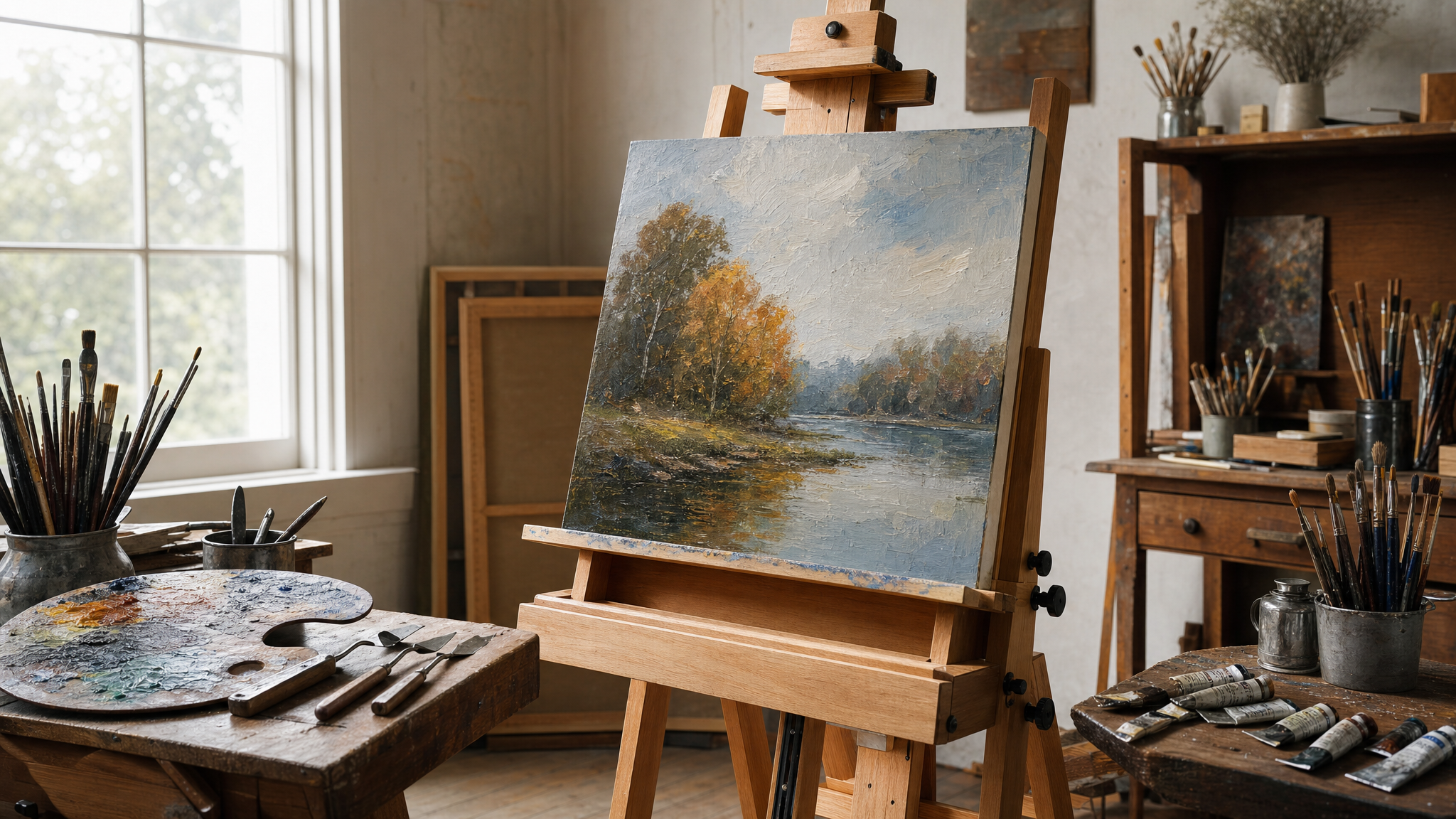
An oil painting Artist Easel should be selected around three practical standards: load capacity, vibration control, and flexible adjustment. Oil painters often work with stretched canvas, thicker paint layers, and repeated brush or palette knife pressure, so the easel must remain firm throughout the painting process.
Load Capacity and Canvas Support
A reliable oil painting easel needs enough strength to support both the canvas and the pressure applied during painting. For small studies, a lighter frame may be enough. For medium to large oil paintings, a studio easel with a wider base, stronger joints, and a secure canvas tray is usually more suitable.
The canvas holder should grip the painting surface firmly without damaging the edges. This is especially important when working on thick stretcher bars or larger canvas panels.
Stability and Anti-Vibration Design
Oil painting requires steady control. If the easel shakes when the artist blends paint, scrapes with a palette knife, or builds texture, the painting process becomes less accurate. A good Artist Easel reduces vibration through solid materials, balanced weight distribution, and tight adjustment points.
This is one key difference from watercolor or sketching easels. Watercolor setups often need a flatter angle to control washes, while sketching easels can be lighter because they handle less pressure. Oil painting generally benefits from a more upright, stronger structure.
Height and Angle Adjustment
Adjustability affects both comfort and technique. Height control helps align the canvas with the artist’s eye level, while angle adjustment supports different brush movements and viewing distances.
| Feature | Why It Matters for Oil Painting |
| High load capacity | Supports heavy canvases and thicker paint layers |
| Stable base | Reduces shaking during brushwork |
| Adjustable height | Improves posture and viewing angle |
| Tilt control | Helps manage painting pressure and surface angle |
For oil painters, the right Artist Easel is not only a support tool. It helps protect workflow, precision, and long-session comfort.
Top Oil Painting Easel Recommendations: Phoenix and Common Easel Types Compared
After understanding the core standards for oil painting support, the next step is to compare which easel type fits your actual workflow. A suitable Artist Easel for oil painting should match your canvas size, painting location, storage needs, and level of pressure applied during brushwork.
For most oil painters, the main choices are heavy-duty studio easels, French style box easels, and hybrid or crank-adjustable easels. Each option serves a different purpose. The best choice is not always the largest or most expensive one, but the easel that gives the right balance of stability, flexibility, and daily usability.
| Easel Type | Best Use Case | Main Strength | Key Limitation |
| Studio Heavy-Duty Easel | Large studio oil paintings | Strong support and stable frame | Requires more floor space |
| French Style Box Easel | Outdoor oil painting and travel | Storage plus portability | Less stable for very large canvases |
| Hybrid / Crank Easel | Medium-size studio work | Smooth adjustment and flexible use | Usually higher in cost |
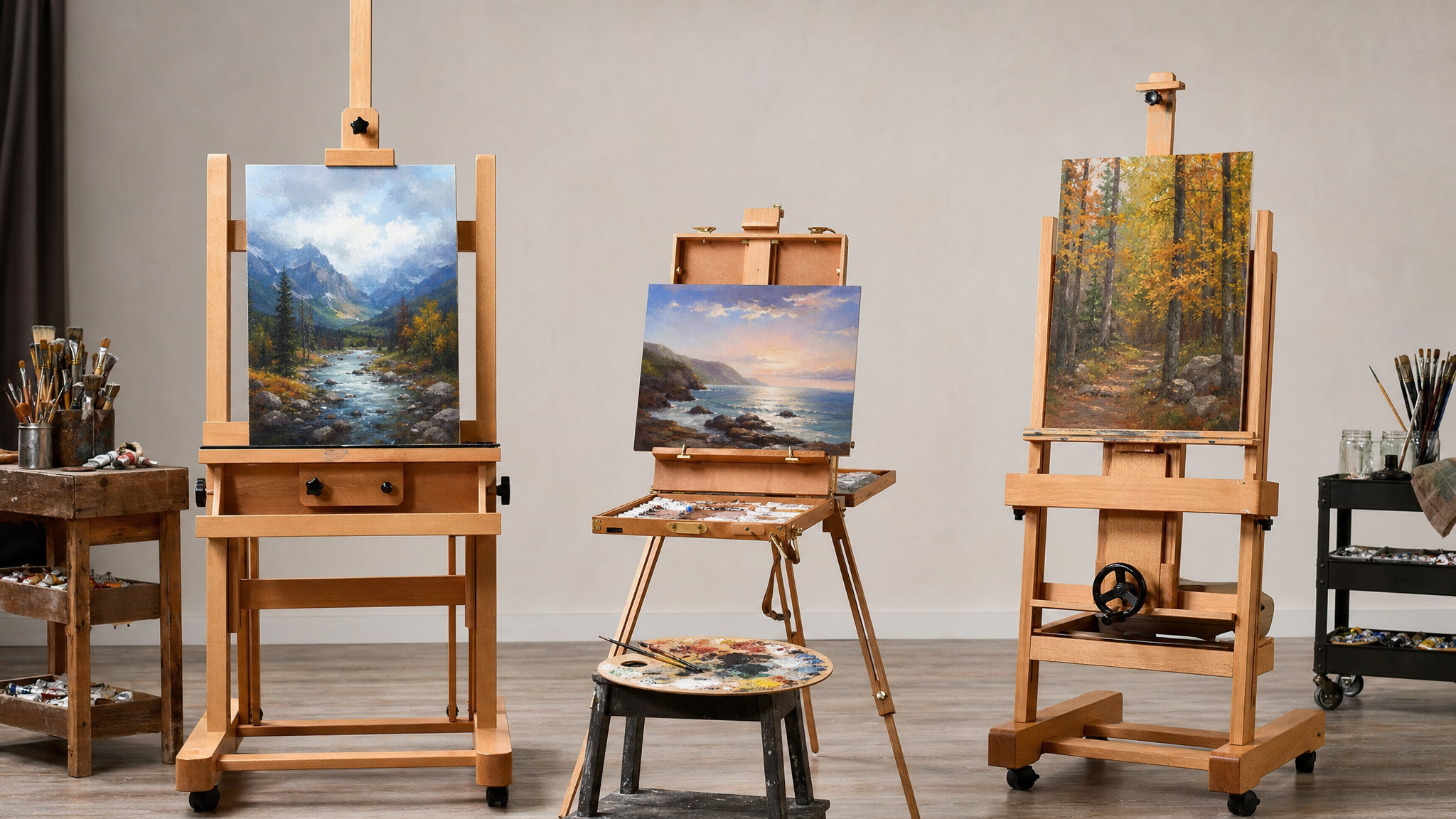
Studio Heavy-Duty Easels
A studio heavy-duty easel is often the most reliable choice for oil painters who work indoors. It usually has a strong wooden frame, a wide base, and a secure canvas support system. This structure helps reduce movement when the artist applies thicker paint, blends large areas, or uses a palette knife.
Phoenix’s studio easel is designed for artists who need stable indoor support for regular painting sessions. Its wooden structure gives the easel a solid, professional feel, while the upright format allows artists to work at eye level and step back easily to judge composition. This is especially useful for oil painting, where layers, proportions, and surface texture often need repeated checking.
Compared with a traditional H-frame easel, a Phoenix studio easel can offer a practical balance between stability and everyday usability. A large H-frame easel is excellent for oversized canvases, but it can be heavy, difficult to move, and excessive for artists working on medium-size pieces. For many home studios, classrooms, and professional workspaces, a well-built studio Artist Easel provides enough support without taking over the room.
Box / French Style Easels for Oil
A French style box easel is a strong option for oil painters who want storage and mobility in one tool. It combines a folding easel with a built-in box for paints, brushes, palette knives, small panels, and other painting accessories. This makes it especially useful for plein air painting, travel, workshops, and artists who need to move between spaces.
For oil painting, the biggest advantage is organization. Instead of carrying a separate toolbox, the artist can keep essential materials inside the easel. When set up correctly, a French style easel creates a compact painting station that supports both canvas and supplies. This can save time during outdoor painting, where light and weather conditions change quickly.
Phoenix’s French style box easel fits this category by offering a portable structure with storage-focused design. It is suitable for artists who paint outdoors, attend classes, or need a flexible setup at home. The wooden construction also gives it a more traditional artist-studio appearance compared with simple metal tripods.
However, a box easel is not the same as a large studio Artist Easel. It is better for small to medium oil paintings, quick studies, and location work. For very large stretched canvases, a heavier studio easel will usually provide better stability. The decision comes down to how often the artist paints outdoors, how much material they carry, and whether portability is more important than maximum canvas support.
Hybrid and Crank-Adjustable Easels
Hybrid and crank-adjustable easels are designed for artists who want more control over positioning. These easels often combine strong studio support with smoother height adjustment. Some use a crank or geared mechanism, making it easier to raise or lower the canvas without lifting the full weight by hand.
For oil painters working on medium-size canvases, this can be a major advantage. Oil paintings often require long sessions, repeated distance checks, and changes in working height. A crank-adjustable easel allows the artist to fine-tune the canvas position with less effort, which can reduce fatigue and improve workflow.
Hybrid easels may also combine wood and metal elements. Wood provides weight and stability, while metal parts can improve adjustment strength and precision. This makes them suitable for artists who want a more technical setup but do not always need the size of a full professional H-frame easel.
The main limitation is cost and complexity. A simple studio easel is usually easier to maintain, while a crank system has more moving parts. Still, for artists who paint frequently and value smooth adjustment, this type of Artist Easel can be a practical long-term choice.
When comparing these three categories, think first about where you paint most often. A fixed studio favors heavy-duty support. Outdoor painting favors a French style box easel. Flexible indoor work may benefit from a hybrid or crank-adjustable model.
How to Match an Artist Easel to Your Painting Scenario
Once you understand the main oil painting easel types, the next step is matching them to your real working environment. The right Artist Easel should support your canvas size, painting habits, and available space without making setup more complicated than necessary.
For large studio oil paintings, a heavy-duty studio easel is usually the safest choice. It gives stronger canvas support, better balance, and more resistance against movement during thick brushwork or palette knife techniques. This is useful for artists who work on stretched canvases for long sessions.
For outdoor painting, a French style box easel or pochade easel is more practical. These designs combine portability with storage, allowing artists to carry paints, brushes, panels, and small canvases in one compact setup. They are best for plein air studies rather than oversized works.
For small studios, classrooms, or student use, a lighter studio easel or compact adjustable easel may be enough. This type of Artist Easel saves space while still offering better support than painting flat on a desk.
| Painting Scenario | Recommended Easel Type | Why It Works |
| Large studio work | Heavy-duty studio easel | Strong support for bigger canvases |
| Outdoor oil painting | French box or pochade easel | Portable with storage space |
| Small workspace or class | Compact adjustable easel | Space-saving and easy to use |
Practical Tips for Using an Artist Easel for Oil Painting
A well-chosen Artist Easel can only perform well if it is set up correctly. For oil painting, small setup details affect canvas safety, brush control, and the overall painting experience. Before starting, check that the easel stands on a flat surface and that all adjustment points are tightened.
Secure Heavy Canvases Properly
When working with a thick stretcher frame or a larger canvas, place the lower edge firmly on the canvas tray first. Then adjust the top holder so it grips the canvas without pressing too hard into the surface. The canvas should not lean loosely, shift sideways, or bounce when touched.
For heavier oil paintings, avoid extending the easel beyond its comfortable support range. A stable Artist Easel should hold the canvas close to its central frame, not too far forward or too high above the main support structure.
Reduce Vibration and Sliding
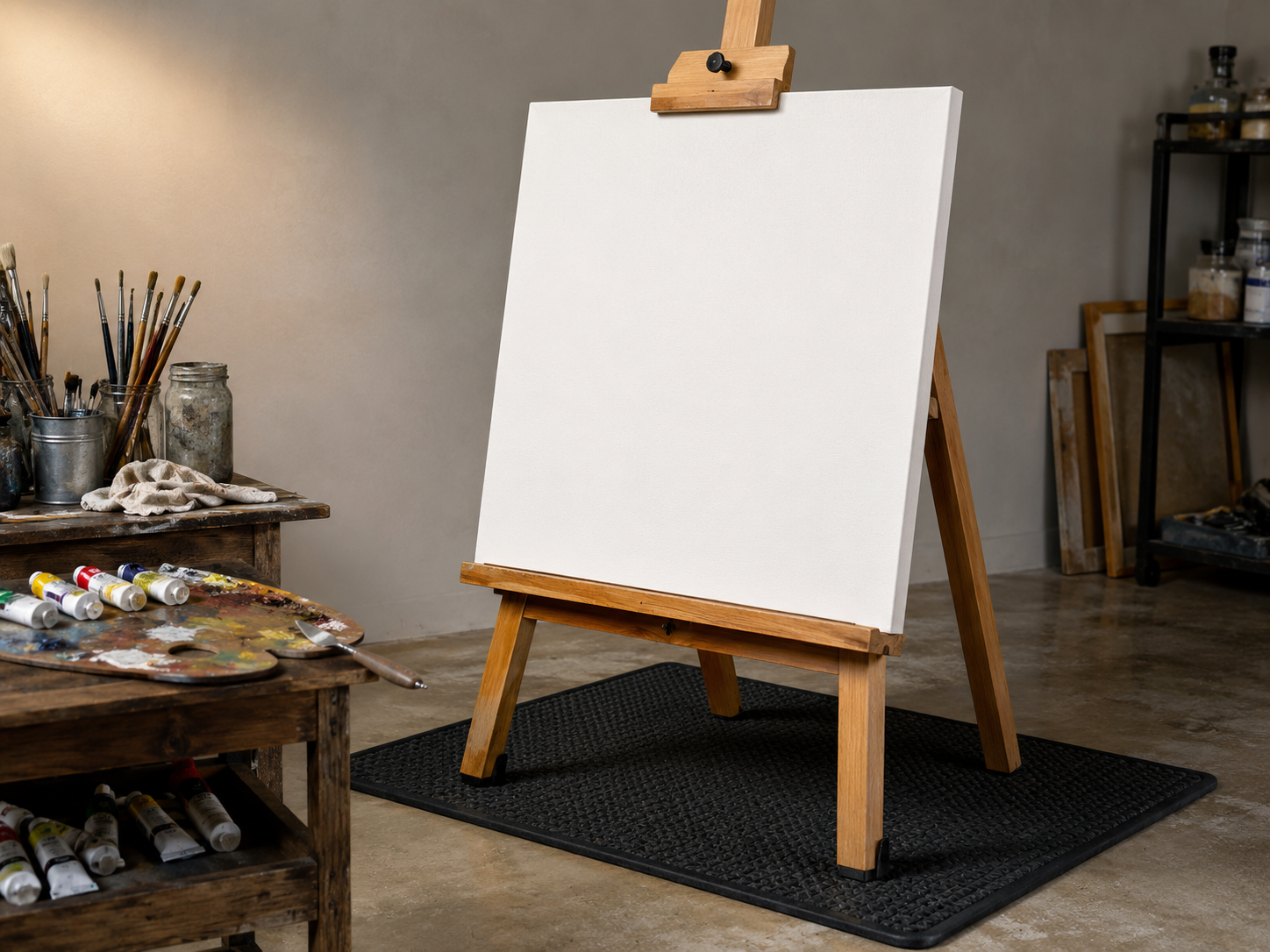
Oil painting often involves repeated brush pressure, blending, scraping, and palette knife work. To reduce vibration, keep the easel legs fully opened and balanced. If the floor is smooth, use rubber feet or a non-slip mat to prevent movement during painting.
For studio use, positioning the easel against a stable wall or in a low-traffic area can also improve control. Outdoor painters should check the ground before setup and avoid soft soil, uneven stones, or windy open spaces when using a lightweight field easel.
Helpful Accessories for Oil Painters
Useful accessories include canvas clamps, tray extensions, stabilizing bars, and carrying straps for portable easels. A side table or brush holder can also keep paint, solvents, and tools within reach without adding weight to the easel itself.
Maintenance Tips for an Oil Painting Artist Easel
A good Artist Easel can last for years if it is cleaned, adjusted, and stored properly. Oil painting often involves paint residue, solvents, dust, and repeated movement, so regular maintenance helps keep the easel stable and easy to use.
Cleaning After Painting Sessions
After each session, wipe paint stains from the canvas tray, adjustment knobs, and support bars before the paint fully dries. Use a dry or slightly damp cloth for general cleaning, and avoid soaking wooden parts with water or solvent. If oil paint has built up around moving areas, remove it carefully so the adjustment system remains smooth.
For studio use, it is also helpful to check the floor area around the easel. Dried paint, dust, or loose tools can affect balance and make the easel less secure during painting.
Lubrication and Adjustment Checks
An Artist Easel with screws, hinges, or sliding parts should be checked regularly. Tighten loose knobs and inspect joints before placing a heavy canvas on the frame. Metal adjustment parts may benefit from light lubrication, but keep oil away from canvas surfaces and painting materials.
Wood and Metal Easel Care
Wooden easels should be stored in a dry, stable environment to reduce warping or cracking. Avoid placing them near strong sunlight, heaters, or damp walls. Metal easels are easier to clean, but they should be kept dry to prevent rust on screws or joints.
When not in use, fold or lower the easel if possible. Proper storage protects the frame, saves space, and keeps your Artist Easel ready for the next oil painting session.
FAQ: Common Questions About Oil Painting Easels
Can an oil painting easel be used for other media?
Yes. A strong oil painting Artist Easel can usually support acrylic painting, sketching, mixed media work, and some display purposes. Its stable frame and adjustable angle make it more versatile than many lightweight easels.
However, watercolor artists may need a flatter working angle to control washes and prevent unwanted dripping. If you paint across several media, choose an easel with flexible tilt adjustment rather than a fixed upright design.
Is a heavy-duty easel worth the investment?
For artists who paint often or work on medium to large canvases, a heavy-duty easel is usually worth considering. It provides better balance, stronger canvas support, and less vibration during brushwork or palette knife techniques.
A lighter easel may be enough for small studies or occasional practice. But if your current setup shakes, slips, or limits your canvas size, upgrading to a stronger Artist Easel can improve both comfort and painting control.
Are outdoor easels suitable for oil painting?
Yes, but they are best for small to medium oil studies. French box easels and pochade easels are popular for plein air painting because they are portable and often include storage for paints, brushes, and panels.
For windy conditions or larger stretched canvases, a studio easel is more stable. Outdoor painters should choose a portable Artist Easel with firm leg support, secure canvas holders, and enough weight to stay steady while painting.
Further Reading: Build a Complete Artist Easel Buying Path
Choosing the best Artist Easel for oil painting is easier when you understand both the specific needs of oil paint and the wider range of easel types available. If you are still comparing studio easels, lyre easels, tabletop easels, box easels, and field easels, return to our complete guide: Ultimate Guide to Choosing the Right Artist Easel. It explains easel structure, materials, adjustment methods, and general selection standards in more detail.
For a more purchase-focused comparison, continue with Artist Easel Types and Buying Tips. That guide helps you compare different easel categories by space, canvas size, portability, budget, and painting habits.
Reading these guides together gives artists a clearer decision path: first understand the full Artist Easel category, then compare oil painting needs, and finally choose the most suitable model for daily use.
Related Posts