Buying an Artist Easel can feel simple at first, but the choices quickly become confusing. Studio easels, A-frame easels, tabletop easels, field easels, box easels, and display easels all look useful, yet each one is designed for a different painting habit, space, and canvas size.
A common mistake is choosing by appearance or price alone. A lightweight easel may look convenient, but it might not support larger canvases. A heavy studio easel may feel professional, but it can be impractical in a small room or classroom. The right painting stand should match how and where you actually create.
This guide will help you understand the main Artist Easel types and the key buying factors behind them. Instead of guessing, you will learn how to compare stability, portability, adjustability, material, storage needs, and suitable painting media before making a decision.
A Brief History of Easels and How Modern Types Are Classified
The Artist Easel has developed from a simple support tool into a highly specialized piece of studio equipment. Early artists needed a way to hold panels, boards, and painting surfaces upright while they worked. Over time, this basic idea evolved into more adjustable structures that could support different canvas sizes, painting angles, and creative environments.
In traditional studios, easels became larger and stronger to support oil painting, portrait work, and large-format canvases. As artists began painting outdoors, lighter field easels and folding designs became more common. Later, tabletop easels, box easels, display easels, and adjustable studio models appeared to meet the needs of students, hobbyists, professionals, and galleries.
Classification by Structure and Function
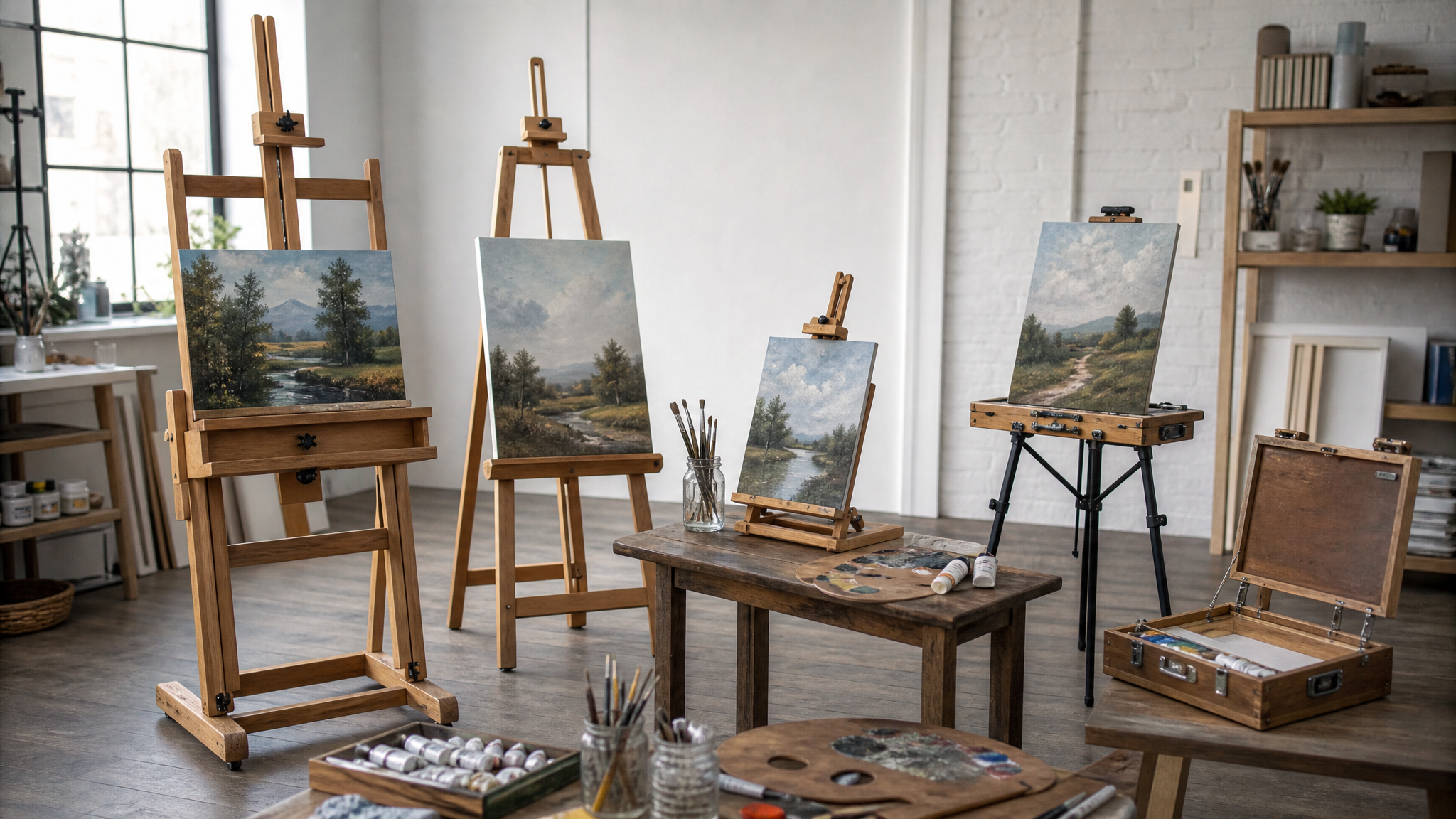
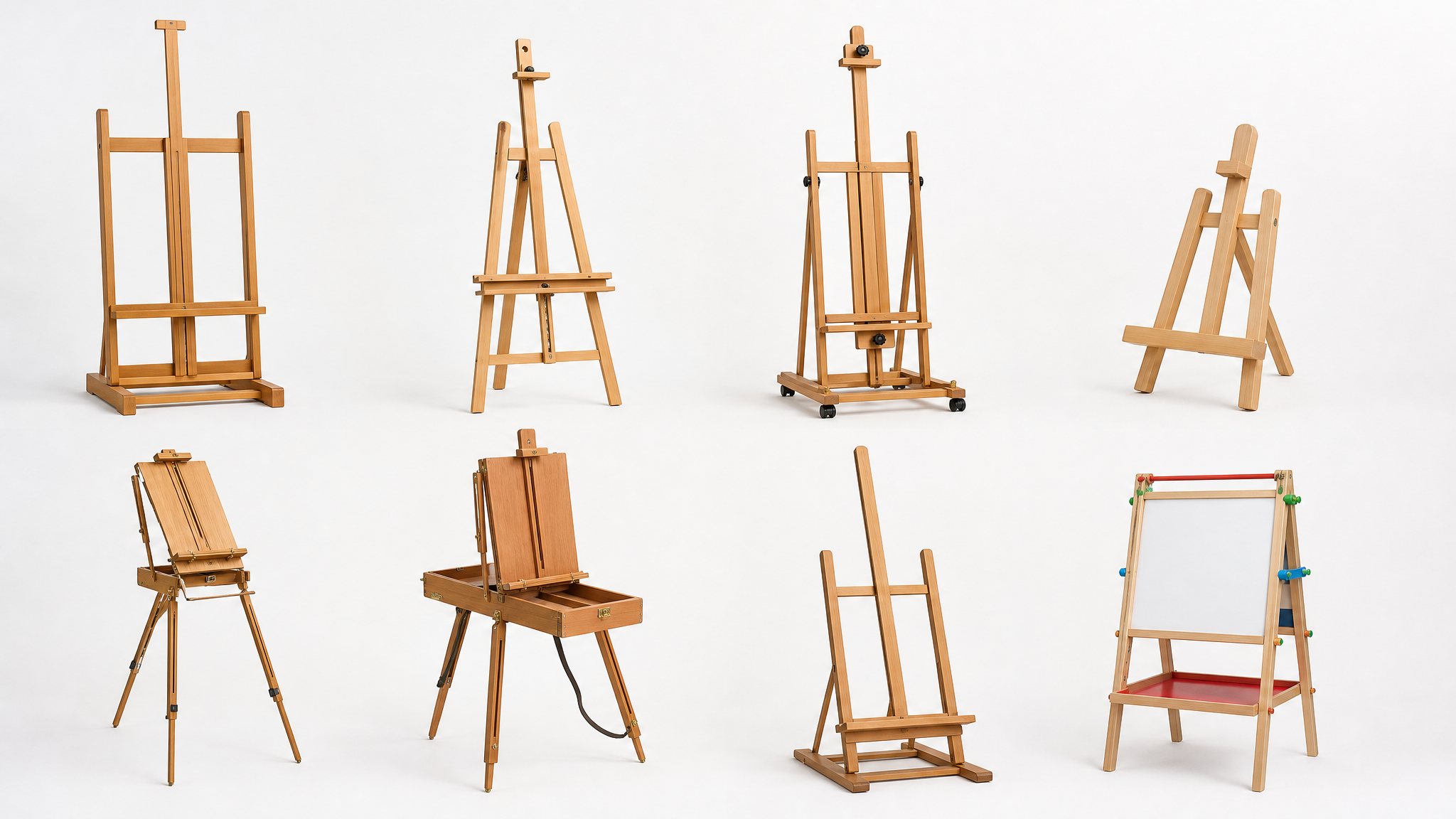
Modern easels are best understood by how they support the artwork and where they are used. A studio easel focuses on stability. An A-frame or lyre easel balances support with space-saving design. A tabletop easel is compact for desks and small paintings, while a field easel is built for portability.
Other types serve more specific needs. A French box easel combines storage and painting support. A pochade box is ideal for small outdoor oil studies. A display easel presents finished artwork rather than supporting heavy painting pressure. Children’s easels, H-frame easels, crank easels, and donkey benches each solve different problems in teaching, professional painting, or seated work.
Understanding these categories helps artists avoid buying by appearance alone. The right Artist Easel should be chosen by structure, function, canvas size, medium, workspace, and how often the easel needs to be moved.
Detailed Artist Easel Types: Pros, Cons, and Comparison Matrix
After understanding the basic history and classification logic, the next step is to compare each major Artist Easel type by function. Different easels are designed around different priorities: stability, portability, canvas size, storage, teaching use, or display. Knowing these differences helps artists avoid choosing a beautiful easel that does not fit their real working needs.
H-Frame Easels
H-Frame easels are among the most stable studio easels. Their rectangular structure, wide base, and strong vertical support make them suitable for large canvases and long painting sessions. They are often preferred by oil and acrylic painters who apply pressure with brushes or palette knives.
The main drawback is space. An H-Frame Artist Easel is usually heavier, less portable, and better suited to a fixed studio rather than a small room or shared classroom.
A-Frame / Lyre Easels
A-Frame easels, also called lyre easels, use a triangular structure. They are lighter and easier to fold than H-Frame models, making them popular for beginners, students, and artists with limited studio space.
Their advantage is convenience. However, they usually cannot support very large or heavy canvases as well as professional studio easels. They are best for small to medium paintings and general practice.
Radial and Donkey Easels
Radial easels often use a central support system that allows flexible canvas positioning. They are useful for artists who need more angle control or who work on different canvas sizes.
Donkey easels are different because they combine a seat and drawing board support. They are commonly used for life drawing, sketching, and classroom work. They are practical for seated drawing but less suitable for large oil paintings.
Tabletop Easels
A tabletop Artist Easel sits on a desk or workbench. It is ideal for small paintings, illustrations, studies, and home use. Many artists choose this type when they do not have space for a floor-standing easel.
Its limitation is canvas size. It works well for compact panels and small stretched canvases, but it does not provide the height or support needed for large-scale painting.
Field / Sketching Easels
Field easels are built for portability. They are usually foldable, lightweight, and easy to carry outdoors. Sketching easels are useful for plein air painting, art classes, travel, and quick studies.
The trade-off is stability. In windy outdoor conditions or when painting on large canvases, a lightweight field easel may shake more than a studio model.
Pochade Box and Box Easels
A pochade box is a compact painting box with a panel holder, often used for outdoor oil studies. A French-style box easel offers more storage and can hold paints, brushes, and small canvases in one unit.
These easels are excellent for artists who value mobility and organization. However, they are usually better for small to medium work rather than heavy studio canvases.
Display, Children’s, and Teaching Easels
Display easels are made to present finished artwork, signs, or decorative pieces. They are not designed for heavy brush pressure or long painting sessions.
Children’s and teaching easels are usually built for safety, easy cleaning, and classroom use. They may include double-sided boards or adjustable heights, making them suitable for learning environments rather than professional studio work.
| Easel Type | Stability | Portability | Load Capacity | Typical Price Level | Best Use |
| H-Frame | High | Low | High | High | Large studio painting |
| A-Frame / Lyre | Medium | Medium | Medium | Low to mid | Students, home studios |
| Radial | Medium to high | Low | Medium to high | Mid to high | Flexible studio work |
| Donkey | Medium | Low | Low to medium | Mid | Seated drawing |
| Tabletop | Low to medium | High | Low | Low to mid | Small paintings |
| Field / Sketching | Medium | High | Low to medium | Low to mid | Outdoor painting |
| Pochade / Box | Medium | High | Low to medium | Mid | Plein air, travel |
| Display | Low | Medium | Low | Low | Presenting artwork |
| Children / Teaching | Medium | Medium | Low | Low to mid | Learning and classrooms |
7 Questions to Ask Before Buying an Artist Easel
Before choosing an Artist Easel, it helps to answer a few practical questions. These questions work like a simple decision tree: each answer narrows your options and makes the final choice easier.
-
What Medium Do You Use Most?
Oil and acrylic painting usually need stronger easel support because artists often apply more brush pressure. Watercolor may require a flatter working angle, while sketching can work well with lighter easels. Your medium should be the first filter.
-
What Canvas Size Do You Usually Paint On?
Small panels can work on tabletop easels or compact A-frame easels. Medium canvases need better height adjustment and firmer support. Large stretched canvases are better matched with studio or H-frame easels.
-
Will You Paint Indoors or Outdoors?
Indoor artists can choose heavier, more stable easels. Outdoor painters need portability, quick setup, and foldable legs. A field easel, pochade box, or French box easel is usually more practical for plein air work.
-
Do You Need Built-In Storage?
If you move between classrooms, studios, or outdoor locations, storage can be valuable. Box easels help carry brushes, paints, palettes, and small panels in one unit. For a fixed studio, separate storage may be more efficient.
-
Do You Prefer Ease of Use or Professional Performance?
Beginners may prefer simple adjustment and lightweight handling. Professional artists often value stronger construction, higher load capacity, and finer angle control. A good Artist Easel should match your skill level without making daily use difficult.
-
What Is Your Budget Range?
Entry-level easels are suitable for study and practice. Mid-range easels usually offer better stability and materials. Higher-end models are more appropriate for frequent painting, larger canvases, and long-term studio use.
-
What About Brand Support and Warranty?
Check material quality, replacement parts, customer service, and warranty terms before buying. A reliable Artist Easel is not only about the frame itself, but also the support behind the product after purchase.
Phoenix Easel Product Line: Series, Use Cases, and Practical Advantages
Phoenix’s easel range is designed around different painting environments rather than one single “universal” model. For artists choosing an Artist Easel, this makes comparison easier: you can start from your workspace, canvas size, and portability needs, then select the easel structure that fits your routine.
Studio and Standing Easels
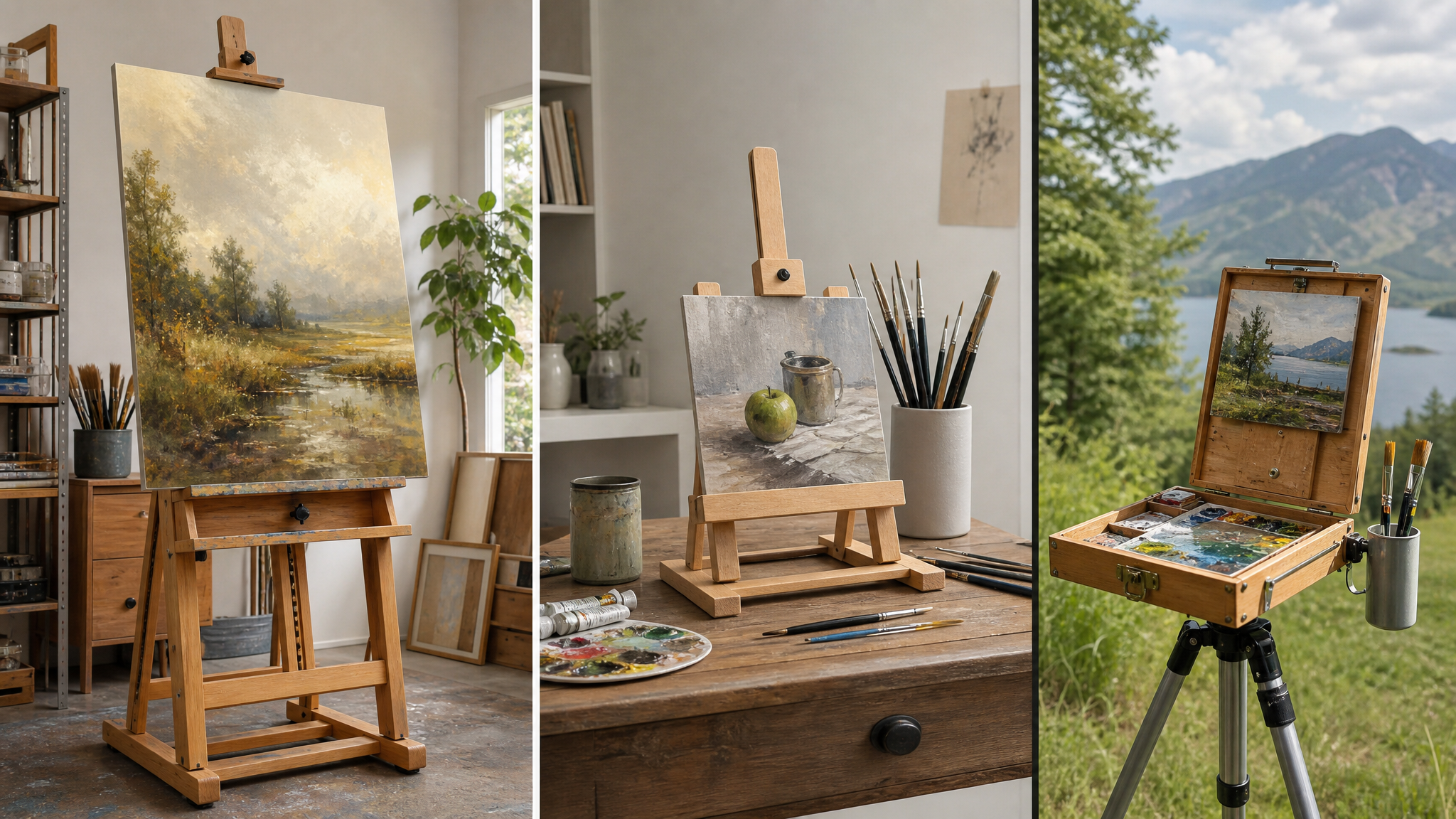
Phoenix studio and standing easels are best suited for artists who paint indoors and need steady canvas support. These models are useful for oil painting, acrylic painting, portrait work, and longer studio sessions where stability matters more than portability.
Compared with lightweight sketching easels, a standing Artist Easel usually offers better balance and a more comfortable upright working position. The trade-off is space: it works best in a home studio, school studio, or professional workspace where the easel can remain set up for regular use.
Table Easels and Compact Easels
Phoenix table easels are suitable for small paintings, studies, craft painting, and limited workspaces. They sit on a desk or table, making them practical for students, hobby artists, and creators who do not have room for a full-size floor easel.
The advantage is convenience. A compact Artist Easel is easy to store, move, and set up for short creative sessions. However, it is not the best choice for large stretched canvases or heavy brush pressure. Artists who mostly work on small canvas panels, boards, or practice pieces will benefit most from this category.
Box Easels and Outdoor Options
Phoenix also offers box easels and portable easel solutions for artists who need mobility. These are useful for plein air painting, workshops, travel, and artists who like to keep paints, brushes, and small panels organized in one place.
A box easel gives more storage than a simple tripod field easel, but it may be heavier. A lightweight outdoor easel is easier to carry, but it usually provides less storage and may be less stable in windy conditions.
Phoenix Easel Strengths and Limitations
Phoenix’s official tools category emphasizes solid, balanced construction, basic and multi-functional easel options, and adjustable features for easier positioning. This makes the product line practical for different user groups, from students to studio artists.
| Phoenix Easel Category | Best For | Main Advantage | Possible Limitation |
| Studio / Standing Easel | Indoor painting, larger canvases | Stronger support and stability | Needs more space |
| Table Easel | Small works, students, home use | Compact and easy to store | Limited canvas size |
| Box / Portable Easel | Outdoor painting, travel, workshops | Storage plus mobility | Less stable than large studio easels |
Overall, Phoenix’s easel range is strongest for artists who want clear product categories, practical usability, and a balance between material quality, adjustability, and everyday painting needs.
Easel Accessories and Practical Setup Tips
Choosing the right Artist Easel is only part of building a comfortable painting setup. Small accessories can make the easel safer, more stable, and easier to use, especially when working with heavier canvases, outdoor conditions, or repeated adjustments.
Canvas Clamps and Holders
Canvas clamps help keep the painting surface firmly in place. They are useful when the canvas is slightly loose on the tray or when the artist works with stronger brush pressure. For oil and acrylic painters, this can reduce small movements that affect edge control and detail work.
A secure top holder is also important. It should press gently against the canvas frame without damaging the surface. If the easel supports different canvas sizes, check that the holder moves smoothly and locks firmly.
Trays, Side Tables, and Tool Support
A canvas tray supports the bottom edge of the artwork, but it can also collect paint, dust, or tools if not used carefully. Keep the tray clean and avoid overloading it with heavy materials. For better workflow, use a separate side table or brush holder for paints, solvents, palette knives, and rags.
This keeps the Artist Easel focused on its main job: supporting the artwork. It also reduces the risk of spills, imbalance, or accidental pressure on the canvas.
Hinges, Knobs, and Pivot Maintenance
Adjustment knobs, hinges, and pivot points should be checked regularly. Loose hardware can cause the easel to shift during painting, while stiff moving parts make height and angle adjustment difficult.
For wooden easels, avoid over-tightening screws into the frame. For metal or hybrid easels, a small amount of suitable lubricant can help moving parts stay smooth. Always wipe away excess oil to prevent contact with canvas or art materials.
Stability-Enhancing Add-Ons
To improve stability, use rubber feet, non-slip mats, stabilizing bars, or weight bags when appropriate. These accessories are especially helpful on smooth floors, uneven outdoor ground, or lightweight portable easels.
A well-supported Artist Easel gives artists more control, reduces vibration, and creates a safer painting environment for both practice and professional work.
FAQ: Buying the Right Artist Easel
What type of easel should beginners buy?
Beginners usually benefit from a simple, stable, and easy-to-adjust Artist Easel. An A-frame easel, tabletop easel, or compact studio easel is often enough for basic painting practice, sketching, and small to medium canvases. These options are easier to move, store, and control than large professional models.
If you are still exploring different media, choose an easel with adjustable height and angle. This gives you more flexibility for acrylic, oil, watercolor, and drawing without needing several separate easels.
Is a more expensive easel always better?
Not always. A higher price may indicate stronger materials, smoother adjustment, or better load capacity, but the best easel depends on your actual use. A professional H-frame easel may be unnecessary if you only paint small canvas panels at home.
Instead of choosing by price alone, compare stability, canvas size support, portability, storage, and build quality. A well-matched Artist Easel should fit your workspace and painting habits, not just your budget.
How can you judge easel craftsmanship?
Check the joints, screws, hinges, canvas tray, and adjustment knobs. A good easel should feel firm when opened, hold the canvas securely, and adjust smoothly without sudden slipping.
For wooden easels, look for smooth finishing, strong frame alignment, and no obvious cracks or rough edges. For metal easels, check for stable locking points and rust-resistant hardware.
Further Reading: Complete Your Artist Easel Selection Journey
Choosing the right Artist Easel becomes easier when you understand both the broad category and the specific painting scenarios behind each model. This buying tips guide has focused on easel types, decision factors, product categories, accessories, and common purchase questions. To build a fuller understanding, it is helpful to connect this article with two related guides.
For a complete foundation, read Ultimate Guide to Choosing the Right Artist Easel. That guide explains the role of easels in art creation, basic structure, adjustment principles, materials, and how different easel designs affect comfort, posture, and painting results. It is a useful starting point if you are still learning how an easel works.
If your main focus is oil painting, continue with Best Artist Easels for Oil Painting. That article compares studio easels, French box easels, and adjustable easels for oil painters who need stronger canvas support, better stability, and practical setup tips.
Together, these three guides create a clear buying path: first understand the full Artist Easel category, then compare specific easel types, and finally choose the model that best fits your medium, space, budget, and painting routine.
Related Posts