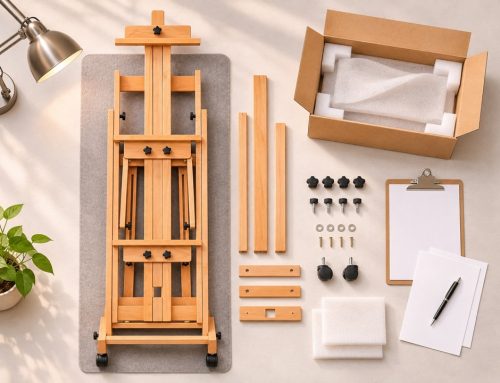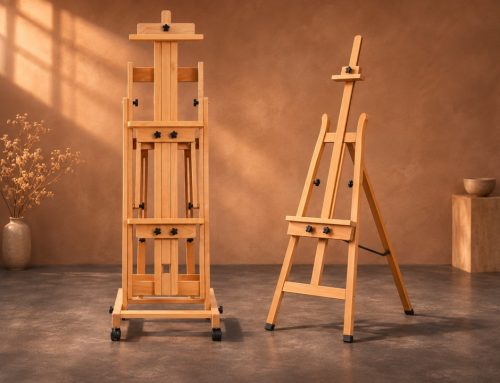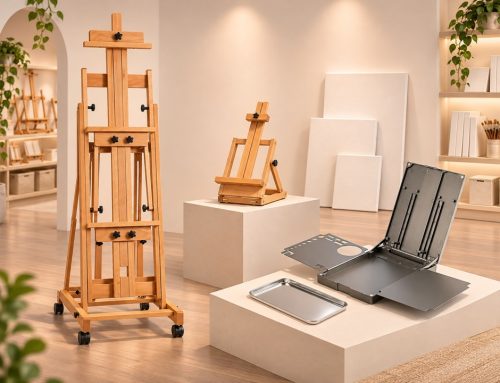
Wooden and aluminum artist easels should be compared by construction and use, not by material alone. A wood studio easel and an aluminum field system may serve entirely different jobs. Compare the complete setups first; then ask what the material and finish change about carrying, handling, maintenance and shipping.
Compare like with like
| Buyer question | What to verify |
|---|---|
| What is it made from? | Ask which parts are wood or aluminum, what finish is applied, and which fittings are made from other materials. |
| How heavy is it in use? | Compare net weight on the same basis, including required stands or mounting hardware where relevant. |
| How does it feel at the working position? | Check base contact, lateral movement, locking behavior and access to controls on comparable setups. |
| What does the channel need to ship? | Record carton dimensions, gross weight, case quantity and protective packing separately. |
| How should customers care for it? | Use the care instructions for the exact finish, hardware and intended conditions. |
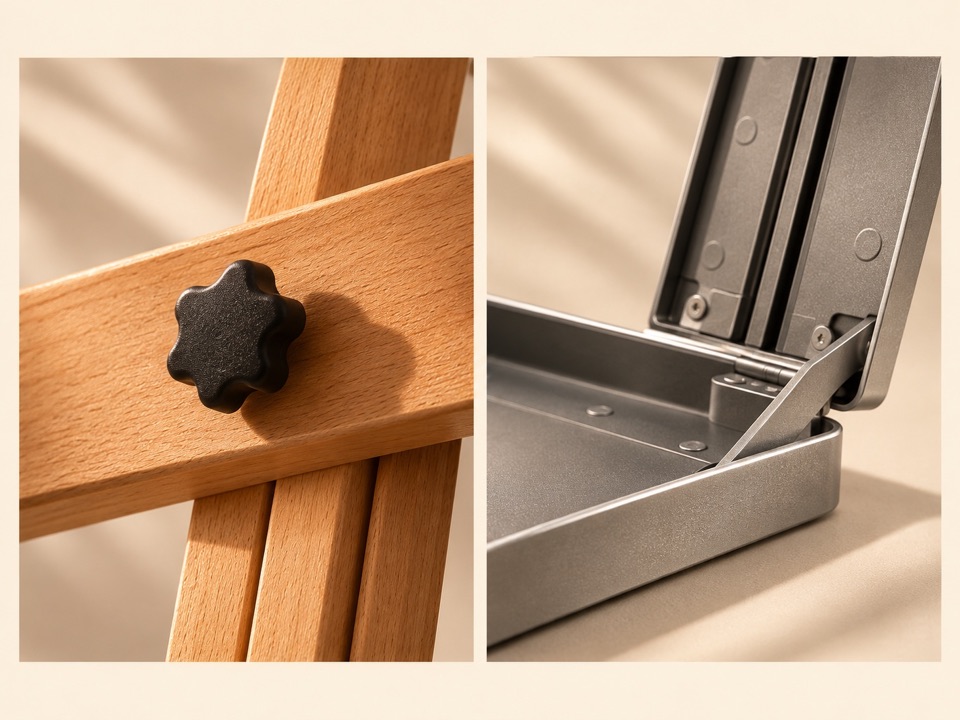
A polished beech rail and a formed aluminum shell are visible clues about construction, not evidence of a load rating. Stability also depends on geometry, the location of the support, repeated adjustment and how the base contacts the floor or ground. Where performance is of commercial importance, request agreed test conditions rather than relying on material stereotypes.
Look where two materials meet
Inspect the parts that move or contact each other: sliders, fastener seats, hinges, clamps and feet. Check for burrs or rough edges where the hand or painting support contacts a part. For finished wood, inspect visible surfaces and the areas around hardware; for aluminum components, inspect edges, joints and any finish at common contact points. Record what passes inspection rather than making unsupported claims about weather resistance, lifetime or scratch resistance.
Position the product for a real use case
When a buyer needs a floor-standing studio model, lead with the support and adjustment range. When the range serves travel painters, lead with packed dimensions, total carry weight and what the setup includes. The material becomes a useful second piece of information, not the main promise.
The Phoenix lyre easel listing gives beech examples, while the Phoenix easel collection lists an aluminum-alloy pochade format. They illustrate different product jobs, not a controlled test of wood against aluminum.
Frequently asked questions
Is an aluminum easel always lighter? No. Compare the weight of the complete working setup. A tripod and any separate supports can materially change what the artist carries.
Does a wood easel always provide more stability? No. Compare the base, joints and support configuration of the actual models in the intended position.
Ask for a like-for-like comparison
Request the material, finish and packing information for the shortlisted products. Share whether the priority is studio use, classroom storage or outdoor transport so the comparison stays relevant.
Related Posts