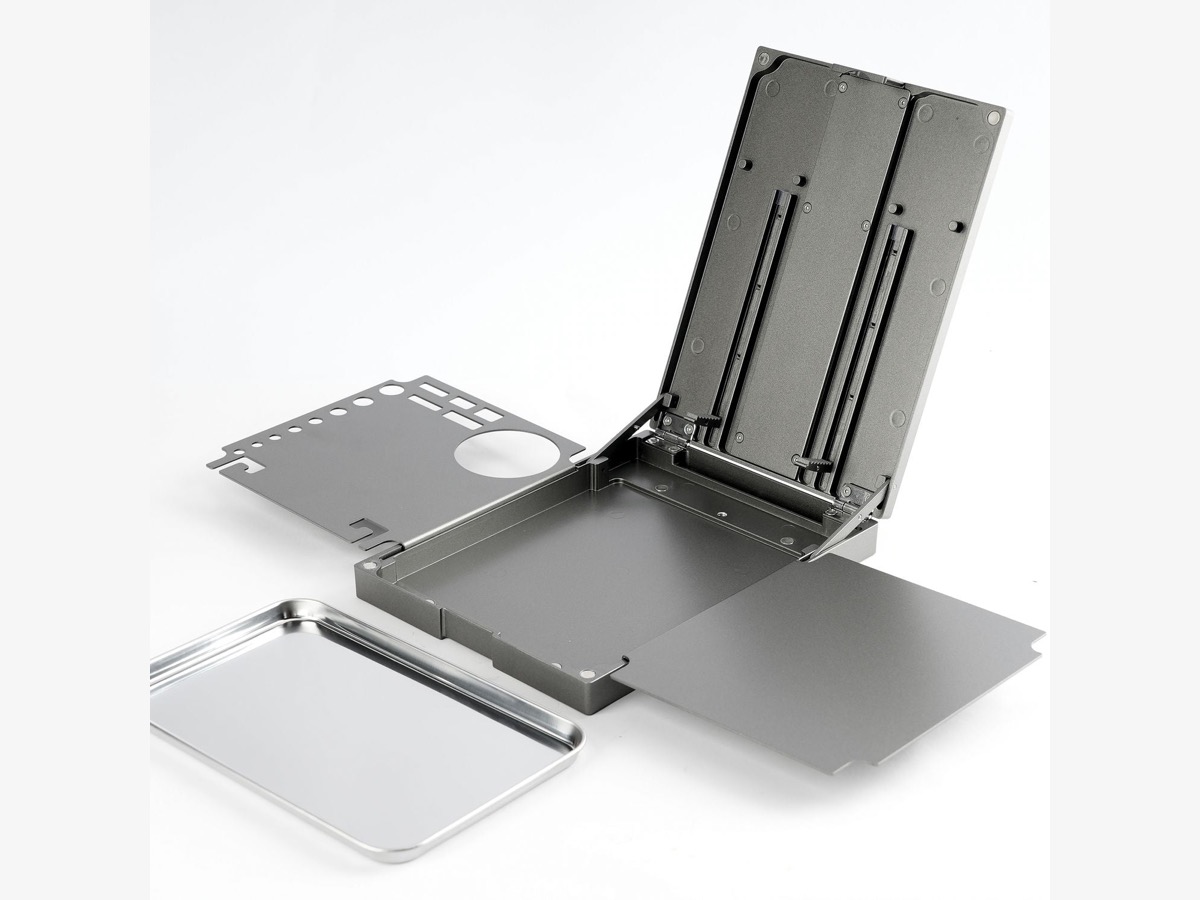
When buying an aluminum pochade box for a retail range or a teaching program, check three things before you compare weights or choose a finish: whether it grips the painting surface, whether it fits the intended tripod setup, and how much room it takes up both folded and in use. Each of those checks can rule out a setup that looks suitable in a product photo.
Read the specification as a set of separate measurements
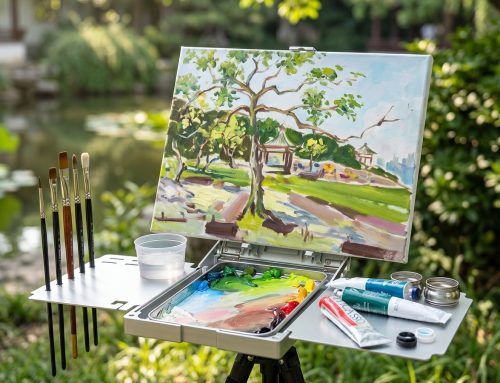
The PHOENIX Aluminum Alloy Pochade Box Pro illustrates why these measurements should be listed separately. The figures below describe the model shown in the Phoenix product brochure. Confirm the specification for the model and configuration you plan to order.
| Check | Phoenix brochure reference | What to verify |
|---|---|---|
| Folded box size | 25 × 18.5 × 3 cm (about 9.8 × 7.3 × 1.18 in) | Separate the closed box measurements from retail carton dimensions and the space taken up by accessories. |
| Canvas height | Up to approximately 40 cm (about 16 in) | Check the minimum grip, maximum clamping thickness, and whether your actual support fits in the orientation you will use. |
| Support-bar extension | Up to 43 cm | Do not use the extension length as the maximum canvas height. They are different measurements. |
| Tripod socket | 1/4-20 threaded mount | Verify the head and plate fit, full seating, and clearance on the assembled setup. |
| Hinge positions | 100°, 120°, and 180° | Check which position suits the medium and working height. Test the flat position with the surface you intend to use. |
Check the panel at the clamp, not just on a ruler
A canvas board, a deep stretched canvas and a sheet of watercolor paper on a backing board can all have the same face dimensions but seat differently in a holder. For a comparison or dealer listing, record the support type, its thickness at the clamping edge, and whether it was checked in portrait or landscape orientation. For a paper-backed setup, measure the full assembly rather than the paper alone.
Match the tripod head, plate and socket
A 1/4-20 socket identifies the thread at the box. It does not tell you whether a specific quick-release plate clears the underside of the box, whether it sits flush, or whether the tripod head will hold the intended setup at the working angle. Use the actual head and plate you expect the customer to use. Check the setup with the painting support and normal working accessories fitted, not just with the box empty.
Separate folded size, working space and shipping size
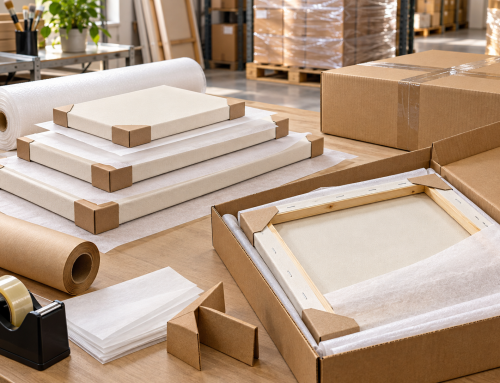
Measure the box folded for bag fit. Open it with both side panels fitted to assess clearance on a desk or demonstration counter. Measure the actual carton separately for freight and warehouse planning. These figures answer different questions and should not share a single “dimensions” field.
Keep weight fields separate, too: box as supplied, complete carrying setup, and gross carton weight. If the buyer needs to estimate what an artist will carry, count the tripod and head, panel, and any tools or containers that go with the box. Use the current model sheet or a verified sample for the numbers.
Frequently asked questions
Can a 43 cm support bar hold a 43 cm canvas?
Not on the basis of the support-bar measurement alone. For this Phoenix model, the brochure gives approximately 40 cm as the supported canvas height. Thickness and orientation still need checking.
Does a flat setting mean watercolor paper can be clamped by itself?
No. A flat setting gives you a horizontal working position. It does not establish how the holder grips a loose sheet; check the paper with its backing board.
Are the folded dimensions the carton dimensions?
No. They describe the closed box, not the protective packing or any accessories in the shipment.
Request the model sheet before confirming fit
Ask Phoenix Art Materials for the current specification. Include the surface sizes and thicknesses you plan to support, the tripod head or plate you intend to use, and whether you need folded-box or shipping dimensions.
Related Posts