Introduction to Canvas Rolls for Artists and Wholesalers
What is a Canvas Roll and Why Choose It?
A canvas roll is a continuous, tightly wound length of woven fabric—typically made from cotton or linen—that serves as the ultimate foundational painting surface for fine art. Unlike standard pre-stretched canvases that confine an artist to rigid, predetermined dimensions, rolls of canvas offer unparalleled creative freedom and structural flexibility.
Professional artists and commercial studios choose raw or pre-primed rolls to gain complete control over their artistic process. This format allows for the creation of custom sizes, oversized murals, and non-traditional aspect ratios. Furthermore, working directly from a roll ensures a more consistent fabric weave across a cohesive series of works, making it an indispensable asset for high-end gallery exhibitions.
| Feature | Pre-Stretched Canvas | Canvas Roll |
| Sizing Flexibility | Fixed standard sizes | Unlimited custom sizing |
| Shipping & Logistics | Bulky, high risk of damage | Compact, highly secure transport |
| Cost Efficiency | Higher per-unit cost | Economical bulk pricing |
| Texture Consistency | Varies by batch | Identical across large projects |
Benefits of Buying Canvas Rolls in Bulk
For wholesale buyers, art supply retailers, and high-output institutions, purchasing wholesale canvas in bulk yields significant economic and logistical advantages. As a premier canvas roll manufacturer and supplier, we engineer our bulk products to meet rigorous archival quality standards while optimizing supply chain efficiency.
- Maximizing Profit Margins:Purchasing premium-grade art supplies in bulk drastically lowers the cost per square meter, allowing distributors to offer competitive market pricing while securing healthy margins.
- Reduced Shipping and Storage Costs:Unstretched fabric rolls occupy a fraction of the cargo space required for pre-assembled frames. This compact profile reduces international freight expenses and maximizes warehouse storage capacity.
- Catering to the Professional Market:Stocking high-quality rolls of canvas positions your business as a preferred supplier for professional painters, academies, and commercial design firms that demand industrial quantities of premium painting surfaces.
- Zero Waste Production:Bulk rolls allow users to cut exactly what they need for specific stretcher bars, eliminating the material waste associated with off-the-shelf sizes.
Key Canvas Roll Materials: Linen vs. Cotton
Choosing the right base material is the most critical decision for artists creating archival work and wholesalers stocking high-demand inventory. As a leading canvas roll manufacturer and supplier, we focus on the distinct structural properties of each fiber to ensure your inventory or artwork stands the test of time.
Cotton Duck Canvas
Cotton duck is the heavy-duty, tightly woven staple of the art world. It offers excellent elasticity, making it incredibly easy to stretch over stretcher bars without tearing. For commercial studios and high-volume wholesale canvas orders, cotton provides the perfect balance of affordability and reliable quality.
- Best For:Acrylics, structural practice, high-volume workshops, and broad commercial supply.
- Texture:Generally uniform with a predictable fabric weave.
- Sourcing Advantage:Highly cost-effective for cotton artist canvas bulk studios looking to maximize their budget.
Linen Canvas: Premium Durability for Professional Art
Linen remains the gold standard for premium-grade artist canvas. Made from flax fibers, it contains natural oils that preserve the flexibility of the painting surface over centuries, preventing the fabric from becoming brittle. Its irregular texture gives fine art a distinct, organic character that cannot be replicated by machinery.
- Best For:Professional oil painting, heavy impasto, and museum-quality archival art.
- Strength:Threads are naturally stronger than cotton, preventing sagging under heavy paint layers.
- Sourcing Advantage:Investing in a premium linen artist canvas roll satisfies the strict longevity standards demanded by galleries and collectors worldwide.
Synthetic and Blended Canvas Options
For specialized global markets, synthetic fibers (like polyester) and poly-cotton blends offer unique advantages. These materials resist climate-induced expansion and contraction, making them ideal for large-scale installations in humid environments.
| Material Type | Durability | Elasticity | Texture Profile | Price Point |
| Cotton Duck | Medium-High | High (Easy to stretch) | Uniform & Regular | Economical |
| Linen | Maximum (Archival) | Medium (Taut) | Natural & Irregular | Premium |
| Poly-Cotton Blend | High | Medium-High | Smooth & Consistent | Mid-Range |
Understanding Canvas Weight, Texture, and Width
Choosing the right rolls of canvas requires a solid understanding of physical specifications. For professional artists and bulk buyers, the combination of fabric weight, weave texture, and roll width dictates the final artwork’s quality and the stretching workflow’s efficiency.
Canvas Weight Explained: Light, Medium, and Heavyweight
Fabric weight is measured in ounces per square yard (oz) or grams per square meter (gsm). It determines the strength of the painting surface and how much tension it can handle during the stretching process.
- Lightweight (4 oz – 7 oz):Best for small sketches or quick studies. It is highly flexible but prone to sagging if stretched over large frames.
- Mediumweight (8 oz – 10 oz):The industry standard for commercial art supplies. It offers an excellent balance of flexibility and strength, making it ideal for standard studio workflows and bulk stretched canvas
- Heavyweight (12 oz – 15 oz+):Premium grade utility canvas. Built for large-scale commissions, heavy impasto techniques, and deep-edged stretcher bars. It resists warping under heavy paint layers.
Texture and Weave Types: Smooth vs. Rough Surfaces
The fabric weave creates the foundational texture that interacts with the artist’s brush. As a leading manufacturer, we categorize these into three primary textures:
| Texture Type | Weave Profile | Best Used For |
| Fine / Smooth | Tight, uniform weave | Detailed portraiture, glazing, and fine graphic work. |
| Medium | Balanced, traditional weave | General landscape, abstract, and commercial studio work. |
| Rough | Coarse, prominent weave | Broad brushwork, heavy palette knife applications, and high-expression art. |
Standard and Custom Widths for Large-Scale Projects
We supply rolls of canvas in a wide variety of dimensions to minimize waste during commercial cutting. Standard commercial widths typically range from 36 inches up to 120 inches, allowing artists to execute massive murals or oversized gallery pieces without seams. For specialized wholesale orders, custom sizes and extra-wide rolls can be tailored to match specific studio framing machinery or unique architectural installations.
Surface Treatments: Primed vs. Unprimed Canvas Rolls
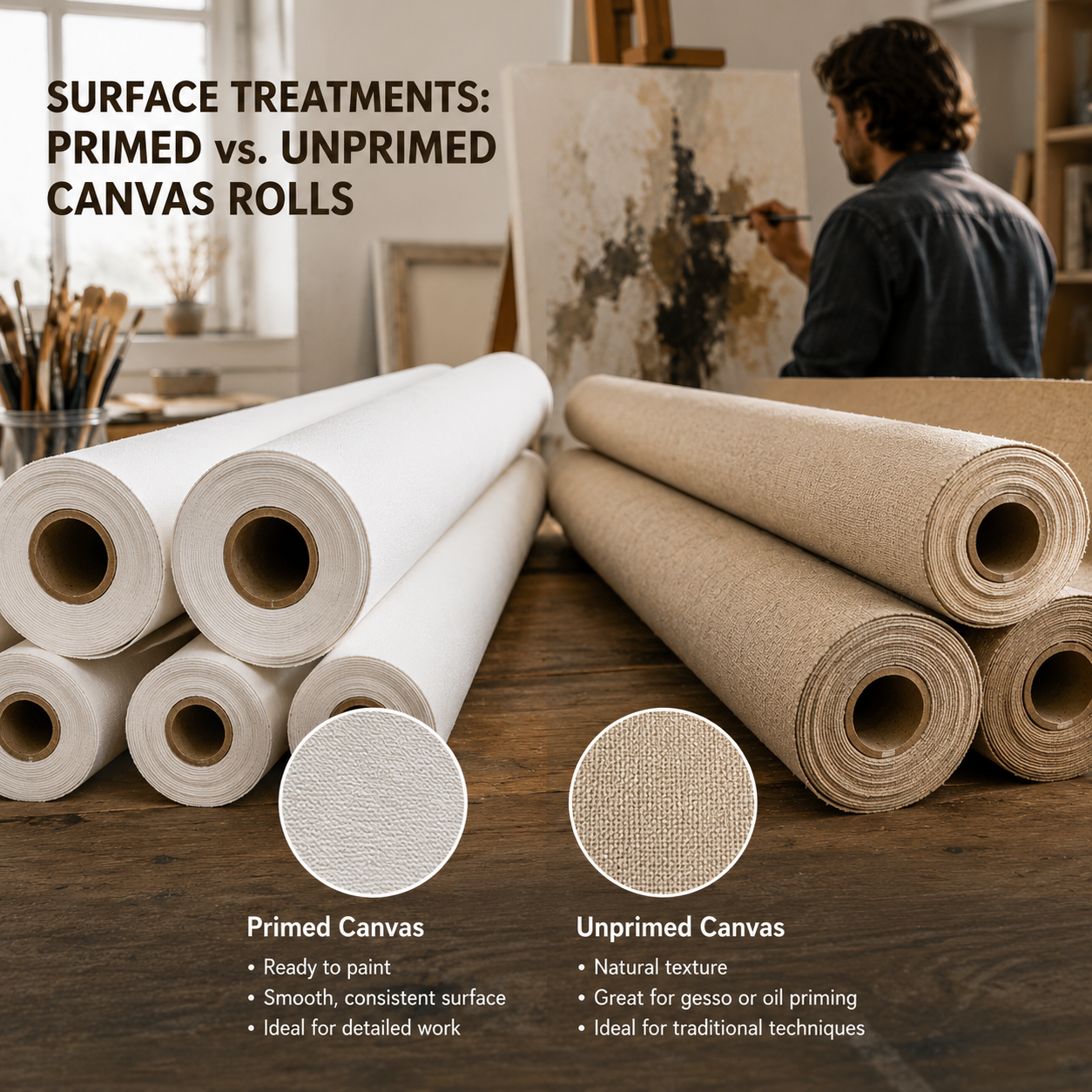
Choosing between raw fabric and pre-treated surfaces is a critical decision for artists and bulk buyers alike. As a dedicated canvas roll manufacturer and supplier, we provide both options to match specific artistic techniques and commercial demands.
Raw (Unprimed) Canvas for Custom Sizing and Priming
Raw, unprimed canvas offers the ultimate flexibility for professional studios and workshops. Buying unprimed canvas rolls allows artists to cut custom sizes without being restricted by standard manufacturing dimensions.
- Custom Control:Artists can handle their own sizing (using rabbit skin glue or PVA size) and control the exact absorbency of the surface.
- Texture Preservation:Keeping the fabric raw until stretching ensures the natural fabric weave remains tight and uncompromised during transit.
- Cost Efficiency:For wholesalers, stocking raw rolls of canvas reduces inventory complexity, as a single roll can serve multiple end-uses.
If you prefer a highly textured, rustic base for unique applications before applying your own grounds, you can also explore specialized options like our 100% burlap unprimed stretched canvas for specialized display projects.
Pre-Primed Canvas: Acrylic Gesso vs. Oil Primer
For busy studios and commercial supply, pre-primed rolls save massive amounts of labor time. We apply premium-grade coatings uniformly across the entire length of the roll to ensure a flawless painting surface.
| Primer Type | Best For | Key Characteristics |
| Acrylic Gesso | Acrylics, Oils, Mixed Media | Highly versatile, flexible, quick-drying, and non-toxic. |
| Oil Primer | Strictly Oil Painting | Non-porous, produces luminous oil colors, requires traditional curing. |
Our pre-primed artist canvas rolls feature multi-coat priming that prevents paint oils from penetrating and rotting the underlying cotton duck or linen fibers, securing long-term archival quality for gallery exhibitions.
How to Choose the Right Canvas Roll by Art Technique and Application
Choosing the right painting surface depends heavily on the medium and scale of the artwork. As a premier artist canvas manufacturer, we understand that professional results require matching the fabric weave and priming to the specific technique.
Best Canvas Rolls for Oil and Acrylic Painting
Oil and acrylic paints behave differently on the fabric surface. Oil paints require a robust barrier to prevent the oil from rotting the fibers, while acrylics offer more flexibility but need proper tooth for adhesion. When selecting wholesale canvas rolls for flexible studios , matching the primer to the medium is crucial for archival quality.
- Oil Painting:Requires an oil-primed or high-quality universal acrylic gesso surface. Linen is the premium grade choice here due to its strength and resistance to moisture retention.
- Acrylic Painting:Works perfectly on universal acrylic pre-primed cotton duck or linen canvas.
- Mixed Media:Heavyweight, tight-weave cotton rolls provide the structural integrity needed for heavy layering.
Selecting Canvas for Different Project Sizes and Mediums
The scale of the project dictates the fabric weight and texture. Large-scale murals or heavy impasto techniques require a sturdy heavyweight backing to prevent sagging over time. For tailored insights into specific media, professionals often consult our guide on how to select canvas rolls for professional oil painters.
| Project Scale / Medium | Recommended Canvas Type | Ideal Weight | Texture |
| Large-Scale / Murals | Heavyweight Cotton Duck or Linen | 12 oz – 15 oz | Medium to Rough |
| Fine Detail / Portraits | Portrait Grade Linen | 7 oz – 9 oz | Ultra-Smooth |
| Standard Studio Work | Medium Cotton Duck | 10 oz – 12 oz | Medium / Fine |
| Heavy Impasto / Palette Knife | Heavy Linen | 12 oz+ | Rough / Distinct |
Sourcing and Bulk Purchasing Guidelines for Wholesalers
Quality Metrics and Longevity Standards for Commercial Supply
When sourcing a wholesale canvas inventory, commercial buyers must prioritize archival quality and structural integrity. As a trusted canvas roll manufacturer and supplier, we ensure our premium-grade products meet rigorous longevity standards to protect your brand’s reputation.
For high-volume distribution, focus on these critical performance metrics:
- Acid-Free Formulation:The primer layer must be completely acid-free to prevent the fabric from yellowing or becoming brittle over time.
- Tensile Strength:High-quality rolls of canvas must withstand heavy tension during the stretching process without tearing or warping.
- Fungal Resistance:Bulk inventory often spends time in transit and warehousing; look for materials treated to resist moisture and mold.
Choosing reliable bases is essential for long-term customer satisfaction. For instance, stocking high-demand options like a white artist canvas provides your clients with a versatile, neutral foundation suitable for various commercial applications.
Global Sourcing, Logistics, and Packaging for Canvas Rolls
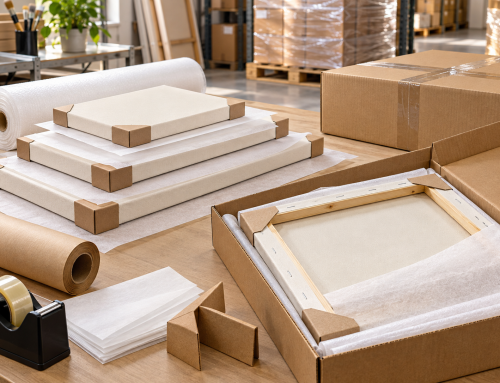
Managing global logistics for art supplies requires smart packaging and optimized shipping methods to protect the material from transit damage. Heavy fabric weight and bulk dimensions mean that improper handling can ruin an entire shipment.
Our standard commercial shipping protocols include:
| Logistics Phase | Packaging & Protection Standard |
| Inner Core Protection | Rigid, heavy-duty cardboard tubes prevent the artist canvas from crushing or creasing under pressure. |
| Moisture Barrier | Every canvas roll is sealed in waterproof plastic sleeving to guard against humidity during ocean freight. |
| Outer Warehousing | Reinforced multi-layer master cartons are stacked on standardized pallets for efficient forklift handling. |
By streamlining your supply chain with a direct manufacturer, you secure stable pricing, consistent fabric weave quality, and custom sizing options. This approach allows you to efficiently meet the strict volume demands of local art studios, academies, and retail distributors worldwide.
Storage, Maintenance, and Best Practices for Rolled Canvas
Proper Storage Conditions to Prevent Damage
To maintain the premium grade quality of your artist canvas, proper inventory management and climate control are non-negotiable. Whether you are a distributor stocking up on wholesale canvas or a professional artist managing large-scale studio supplies, improper storage will ruin the fabric weave and crack the primer.
- Vertical Storage:Always store rolls of canvas vertically on their ends or suspended on heavy-duty racks. Never stack them horizontally on top of each other, as the weight causes permanent pressure creases and warps the inner core.
- Climate Control:Maintain a stable environment with a temperature around 20°C (68°F) and relative humidity between 40% and 50%. Excessive humidity triggers mold growth on organic linen and cotton duck fibres, while extreme dryness makes pre-primed layers brittle.
- Keep Sealed:Keep the canvas rolls wrapped in their original protective plastic or acid-free paper until use to shield the painting surface from dust, UV exposure, and moisture.
Techniques for Stretching and Mounting Rolled Canvas
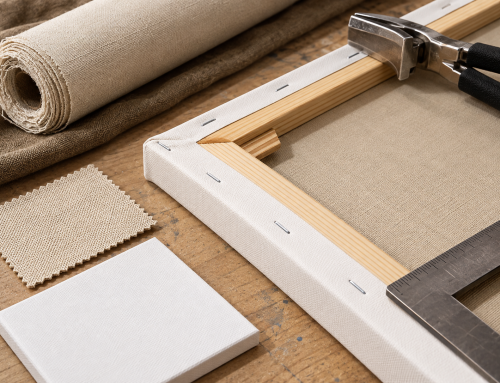
Transforming a raw or pre-primed canvas roll into a stable, professional painting surface requires precision and the right tools. Master the stretching process to ensure long-term archival quality and prevent future sagging.
| Stretching Step | Key Action | Pro Tip |
| 1. Cutting | Measure and cut the fabric, leaving at least 2-3 inches of extra margin on all sides beyond the stretcher bars. | Use heavy-duty fabric shears for a clean edge on thick cotton duck. |
| 2. Tacking | Secure the canvas with a staple gun in the center of all four opposing sides, pulling the fabric taut. | Always pull from the center outward to keep the fabric grain straight. |
| 3. Tensioning | Work your way to the corners using canvas pliers, alternating sides in a diamond pattern to distribute tension evenly. | For advanced structural tips on custom sizes, see our guide on advanced techniques for stretched canvas. |
| 4. Corners | Fold the corners neatly using a hospital corner fold to minimize bulk on the sides of the frame. | Tap the back staples flush with a hammer for a perfectly clean finish. |
Note for Unprimed Canvas: If you are working with unprimed canvas, stretch the raw fabric slightly looser. The material will shrink tightly over the frame once you apply your sizing and acrylic gesso or oil primer.
Related Posts