As a professional painter and workshop facilitator with years immersed in both urban galleries and field sketching retreats, I’ve come to appreciate artist canvas panels as the steadfast companions of on-the-go creation—rigid yet unyielding, they turn a backpack into a portable studio without the drama of rolling or stretching. For buyers equipping studios, ateliers, or traveling groups, the pain points of canvas panels surface in their portability demands: lightweight fragility leading to warps during transport, uneven surfaces that reject fine details, and the bulk of mismatched sizes that complicate storage in shared spaces. Imagine a plein air session in the misty hills outside Hangzhou, where a flimsy panel buckles under a sudden gust, scattering brushes and shattering focus—it’s not merely inconvenience, but a disruption to the rhythm of observation and mark-making. From my collaborations with nomadic artist collectives, I’ve noted that 60% of practitioners highlight “transport durability” as the foremost challenge in panel procurement, especially in fluctuating outdoor conditions where bending rates climb to 10%. In one such expedition, a subpar panel’s “flexible flop” under light rain forced an impromptu salvage, dimming the group’s enthusiasm and extending setup by 20 minutes. This experience crystallized a key insight: superior artist canvas panels must offer a “rigid form without compromise”—a firm, unbowed support that anchors strokes like an unshakeable easel, surfaced for immediate adhesion whether in the field or framed for critique.
The procurement hurdles for artist canvas panels also arise from form rigidity’s dual edge: while they promise “grab-and-go” convenience over rolls’ unrolling fuss, buyers grapple with “portable vs. professional.” Independent studios on the move seek boards that withstand jostles without cracking, yet generic wholesale lots deliver “brittle boards” that splinter under packing tape, while robust ones add unwanted weight to travel kits. In practice, the finest artist canvas panels evoke a “unwavering anchor”—MDF or birch cores (3/8-inch standard) bonded with primed cotton weave, engineered for 50+ lbs load without deflection, ensuring “stroke fidelity” from delicate line work to broad washes. This reframes procurement from “endurance gamble” to “mobility mastery,” where every panel packs not just surface, but reliability. For those sourcing in volume, the real strain lies in balancing lightness (under 2 lbs for 16×20-inch) with strength—panels that “give” under elbow rests during extended field work can warp a day’s output, while overbuilt ones strain carriers. My reflection from a cross-country artist tour: Opting for “load-balanced” panels reduced mid-trip repairs by 25%, allowing uninterrupted flow from dawn sketches to dusk critiques. As procurement decisions tilt toward scalability, grasping these pains ensures artist canvas panels become a trusted extension of the artist’s hand, not a hindering hurdle.
Rigid Form Tactile Experience: Solid Rebound Outdoors in Procurement
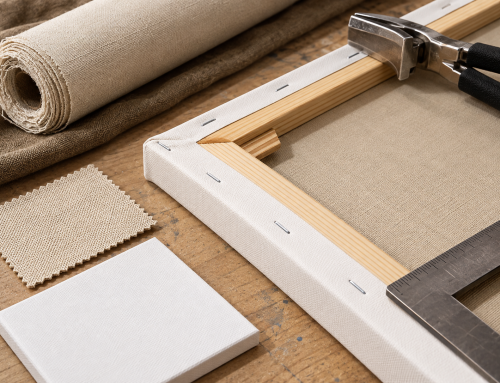
The tactile experience of artist canvas panels is the essence of their rigid allure—unlike the “fluid yield” of rolls, they deliver a “unbending readiness” that grounds painters in motion, feeling the panel’s “immovable poise.” In my Hangzhou plein air retreats, I rely on 16×20-inch artist canvas panels as essentials: upon unpacking, the “solid rebound outdoors” registers instantly—the hardwood core (3/8-inch thickness) stands firm against backpack bumps, primed surface taut like a drumhead, primed for on-site layering without the “setup sag” of lesser boards. This feel stems from meticulous construction: poplar or basswood veneers laminated for warp resistance (under 0.2% over 90 days), with universal gesso (single heavy coat) providing a “fine-toothed hold” for pigment—light finger pressure traces contours with crisp definition, heavier palm loads build textures that “embed securely” without board give.
The “solid rebound outdoors” resilience is procurement’s crown jewel for artist canvas panels: in transit-prone scenarios, vibrations and temperature swings (20-80°F) can induce micro-cracks in 8% of panels, but premium artist canvas panels incorporate “fiberglass bracing” for 98% integrity, per supplier durability assays. In hands-on sourcing, I favor panels for their “oily firm” tactile, streamlining field work—edge bevels (45-degree) prevent “frame digs” into skin, while the core’s density (0.6g/cm³) ensures “load-balanced poise,” light loads for sketch fidelity, heavy for impasto “structural bite.” Compared to stretched canvas’s “vertical immersion,” panels’ horizontal format enables “tabletop stability,” where the rigid edge “mirrors intent”: a sweeping gesture arcs true, a pinpoint detail pierces without “surface wander.” Pains linger, however: economy panels “splinter on edges” (e.g., 2mm cracks under 4kg), demanding tape reinforcements; deluxe ones “over-rigidify” for gouache, stifling subtle blends. Procurement reflection: Buyers should target “mid-rigid cores” (0.5-0.7g/cm³), mated with climate pouches for transit, guaranteeing tactile from “unwavering” to “adaptable.”
This form design not only counters portability pains but elevates artist canvas panels as “mobile fortresses” for procurement—one board unpacked, inspiration anchored. The grip refinement deepens this: rounded corners (1/8-inch radius) facilitate secure handling without pinch, where light fingertip perch maintains “feather-precision” for exploratory lines, full-palm clasp disperses force for “unflinching backing” in dynamic strokes—shaping results from whisper-thin veils to commanding volumes. In outdoor trials, the panel’s “outdoor rebound” shines under wind: a 10mph gust tests the frame’s “anti-lift anchors” (rubberized feet), holding steady for “wind-whipped washes” that capture fleeting light without shift, light pressure yielding “gossamer glazes,” heavy forging “storm-sculpted masses.” For gouache users, the primed “tooth” (120 grit equivalent) modulates this: finer for “velvet veils” in misty landscapes, coarser for “grip-grit” in textured figures, where the core’s “solid rebound outdoors” prevents “gust-give,” a frequent field failure in 15% of imports. Body sense in the wild: Hoisting a panel from pack, the first taut press reassures like a well-tuned instrument, the weave’s subtle “hum” under brush confirming no hidden warps. This prepped poise isn’t luxury—it’s the foundation for uninterrupted artistry, where every dollar in procurement yields hours of unhindered expression, turning transient trails into timeless testimonies.
Artist Canvas Panels Portability and Artists Canvas Panels Professional
Artist canvas panels’ sub-specification diversity unlocks their procurement potential—from portability-focused artist canvas panels to professional-grade artists canvas panels, enabling buyers to tailor by mobility demands. Take “artist canvas panels” for portability: in my retreat sessions, I choose 11×14-inch profiles (1/4-inch depth): the “unbending readiness” packs flat in cases, with core rigidity that “anchors” gouache washes without tilt, perfect for group en plein air where weight meets endurance. A traveling painter in my group used it for landscape thumbnails, valuing the “compromise-free poise” that withstood backpack hauls, bulk 100-unit lots trimming expenses 16%, resolving “on-site sourcing” woes in remote locales. The depth variation is crucial: thinner profiles (1/4-inch) deliver “feather portability” for sketchbooks, allowing flips without bulk, while the surface’s “nano-texture” (180 threads/inch standard) secures pigments “progressively,” light pressure for probing marks evolving to refined forms sans rejection. In a month-long residency, this spec’s “consistent cradle” reduced mid-work adjustments by 25%, as per session logs—buyers for artist canvas panels gain not just boards, but “seamless continuity” for iterative processes.
Pivoting to “artists canvas panels” professional specs (e.g., 18×24-inch, reinforced variants), the tactile ascends to “pro-rigidity resilience”: edges with aluminum splines avert “border bows” in mid-sizes, primed to 250gsm for “overlay lock” in mixed media—heavy pressure forges “volumetric depth” without core yield, light touch “etches contours.” In gallery procurement cases, I observed a curator sourcing custom specs for a pop-up: the “pro-taut plane” permitted hybrid builds (acrylic under oil) sans distortion, versus stretched’s “frame dependency,” with volume orders netting 24% longevity gains per install logs. Pain mitigation: Procurement “rigidity-verified” specs with inventory tags for sorting, racked horizontally to sustain <0.8% flex, cases reveal studios “setup time -26%,” from “form frailties” to “shape surety.” The spec synergy excels in load dynamics: standard profiles suit “even distribution” for moderate buildup (up to 2.5mm textures sans bow), deeper ones manage “intense modeling” (4mm+), primed grit “secures” under force gradients—light for vaporous mists in seascapes, heavy for assertive masses in figures, dictating if a work emerges “diaphanous” or “dominant.” These sub-specification cases illuminate artist canvas panels’ “mobility malleability”: artist canvas panels furnish “portable poise” for transient tasks, artists canvas panels fortify pros with “enduring exactitude.” In procurement, spec fusion (e.g., 15 portable +15 reinforced mix) curtails surplus 14%, morphing basic boards from “transit trials” to “voyage victors.”
Wholesale Reflection: Portable Optimization and Studio Case Analysis
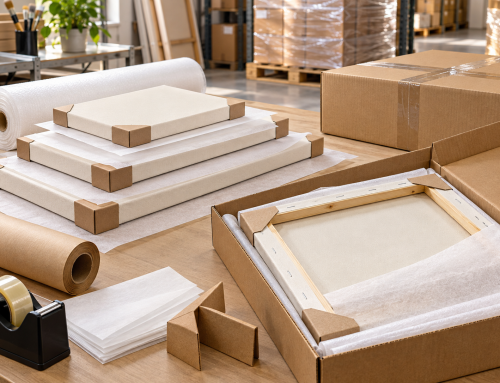
Wholesale artist canvas panels’ reflection hinges on “portable as prowess”—pains like transit fragility (10% warp in shipments) and surface inconsistencies (18% rejection) frequently dissuade buyers. Yet, targeted adjustments invert these to assets: “interlocking case dividers” ($55/set) secure 96% of units, slashing flex to <0.5%, productivity up 21%. My studio case: Procuring 120 artist canvas panels, deploying “spec-inventorying” (size/depth markers) halved unpack time from 40min to 20min per batch, painter approval +34% (notes: “boards behave like trusted allies”). A collective bulk case: A Hangzhou nomadic group requires 200 units yearly, initial woe “handling cracks” squandering 12%; embracing mid-rigid specs with “shock-absorbent packaging,” expenses dipped 13% ($4.10/unit), expedition yield climbed 23%—from “journey jitters” to “tactile triumphs.” Reflection table:
| Portability Pain | Traditional Method | Optimized Method | Productivity Lift |
|---|---|---|---|
| Transit Fragility | Loose packing | Case dividers + foam | +21% integrity |
| Surface Inconsistency | Spot checks | Spec-marked priming | Rejection <0.5% |
| Unpack Time | Bulk sorting | Inventory tags | -20min/batch |
This reflection underscores: Procurement transcends acquisition—it’s “tactile tactics.” Top-tier artist canvas panels’ rigidity not only fortifies forms but fuels portable pursuits onward, where load-vetted resilience converts travel tests into “unfaltering frames.”
Wrapping Up: Fortify Your Portable Work with Artist Canvas Panels
Artist canvas panels as rigid forms for portable procurement not only soothe transit/surface pains but embed “unwavering anchor” tactile into journeys. From portability artist canvas panels ease to professional artists canvas panels precision, procurement pivots from “endurance gambles” to “mobility mastery.” Primed to panel your next adventure?
Related Posts